

MY BOOK
안쪽까지 들여다보는 스프링 시큐리티
책 보러 가기
동시성 문제를 해결하기 위해 낙관적인 락(optimistic lock) 방식으로 구현한 코드에서 문제가 발생했다. JPA 구현체가 엔티티(entity)를 영속성 컨텍스트에 저장하고 인스턴스를 반환하는 과정에서 몇 가지 조건에 의해 의도와 다르게 동작하면서 예외가 발생했다.
문제가 발생한 코드와 상황을 최대한 유사하게 재현하였다. ParentEntity 클래스를 살펴보자. 낙관적 락을 위해 versionNo 필드를 추가한다.
package blog.in.action.domain;

import jakarta.persistence.*;
import lombok.Getter;

@Getter
@Entity
public class ParentEntity {
    @Id
    @GeneratedValue(strategy = GenerationType.AUTO)
    private Long id;
    private String state;
    @Version
    private Long versionNo = 0L;

    public ParentEntity() {
        state = "CREATED";
    }
}
ChildEntity 클래스를 살펴보자. 부모 객체를 일대일 관계로 참조하고 있다.
package blog.in.action.domain;

import jakarta.persistence.*;
import lombok.AllArgsConstructor;
import lombok.Getter;
import lombok.NoArgsConstructor;

@Getter
@NoArgsConstructor
@AllArgsConstructor(staticName = "create")
@Entity
public class ChildEntity {
    @Id
    @GeneratedValue(strategy = GenerationType.AUTO)
    private Long id;
    private String state;
    @OneToOne
    private ParentEntity parentEntity;

    public void update() {
        state = "UPDATED";
    }
}
위 두 엔티티를 사용해 문제 상황을 재현해 보자. 문제 상황은 간단한 테스트 코드로 재현한다. @Transactional(propagation = Propagation.NOT_SUPPORTED) 애너테이션은 @DataJpaTest 애너테이션에 적용된 트랜잭션으로부터 테스트 로직의 트랜잭션을 분리하기 위해 추가한다. 테스트 코드는 아래 순서대로 실행된다.
package blog.in.action;

import blog.in.action.domain.ChildEntity;
import blog.in.action.domain.ParentEntity;
import blog.in.action.repository.ChildRepository;
import blog.in.action.repository.ParentRepository;
import org.hibernate.TransientPropertyValueException;
import org.junit.jupiter.api.Test;
import org.springframework.beans.factory.annotation.Autowired;
import org.springframework.boot.test.autoconfigure.orm.jpa.DataJpaTest;
import org.springframework.dao.InvalidDataAccessApiUsageException;
import org.springframework.transaction.annotation.Propagation;
import org.springframework.transaction.annotation.Transactional;

import static org.junit.jupiter.api.Assertions.*;

@DataJpaTest(
        properties = {"spring.jpa.hibernate.ddl-auto=create-drop"}
)
public class ActionInBlogTest {

    @Autowired
    private ParentRepository parentRepository;

    @Autowired
    private ChildRepository childRepository;

    @Transactional(propagation = Propagation.NOT_SUPPORTED)
    @Test
    void zeroDefaultValueForVersionNo_throwTransientPropertyValueException() {

        var parentEntity = new ParentEntity();
        parentRepository.save(parentEntity);


        var childEntity = ChildEntity.create(null, "CREATED", parentEntity);
        childEntity.update();


        var throwable = assertThrows(InvalidDataAccessApiUsageException.class, () -> childRepository.save(childEntity));
        assertInstanceOf(TransientPropertyValueException.class, throwable.getRootCause());
        assertNull(parentEntity.getId());
    }
}
테스트를 실행해 보면 자식 엔티티에 대한 insert 쿼리가 수행되지 않는다.
Hibernate: select next value for parent_entity_seq
Hibernate: insert into parent_entity (state,version_no,id) values (?,?,?)
Hibernate: select next value for child_entity_seq
엔티티에 필드를 하나 추가하면서 정상적으로 동작하던 비즈니스 로직에서 예외가 발생하기 시작했다. 원인을 살펴보기 전에 엔티티의 라이프사이클(lifecycle)에 대해 간단히 정리할 필요가 있다.
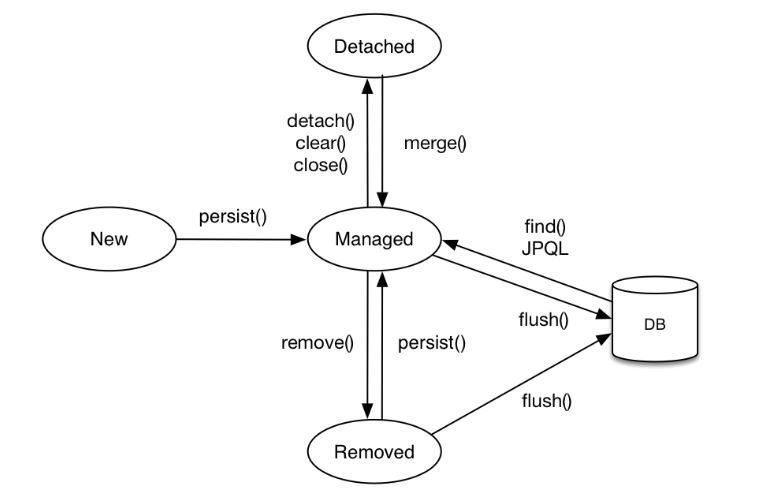
이제 어떤 요소가 오류를 유발했는지 연관된 코드를 살펴보자. 먼저 spring-data-jpa 라이브러리의 SimpleJpaRepository 클래스는 다음과 같이 구현되어 있다.
@Repository
@Transactional(
    readOnly = true
)
public class SimpleJpaRepository<T, ID> implements JpaRepositoryImplementation<T, ID> {

    @Transactional
    public <S extends T> S save(S entity) {
        Assert.notNull(entity, "Entity must not be null");
        if (this.entityInformation.isNew(entity)) {
            this.em.persist(entity);
            return entity;
        } else {
            return this.em.merge(entity);
        }
    }
}
코드 중간에 분기를 위한 JpaMetamodelEntityInformation 클래스의 isNew 메서드를 살펴보자.
null이어야 true를 반환한다.@Id 애너테이션이 붙은 필드의 값을 확인한다.public class JpaMetamodelEntityInformation<T, ID> extends JpaEntityInformationSupport<T, ID> {
public boolean isNew(T entity) {
if (!this.versionAttribute.isEmpty() && !(Boolean)this.versionAttribute.map(Attribute::getJavaType).map(Class::isPrimitive).orElse(false)) {
BeanWrapper wrapper = new DirectFieldAccessFallbackBeanWrapper(entity);
return (Boolean)this.versionAttribute.map((it) -> {
return wrapper.getPropertyValue(it.getName()) == null;
}).orElse(true);
} else {
return super.isNew(entity);
}
}
}
위에서 살펴본 코드를 정리하면 다음과 같다.
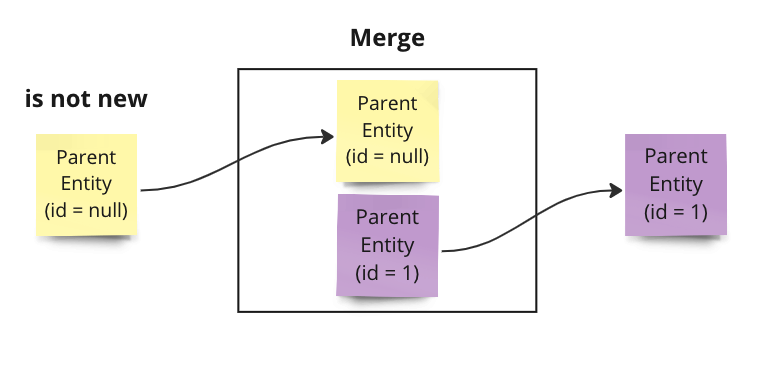
문제를 유발하는 코드를 살펴보고 원인을 요약하면 다음과 같다.
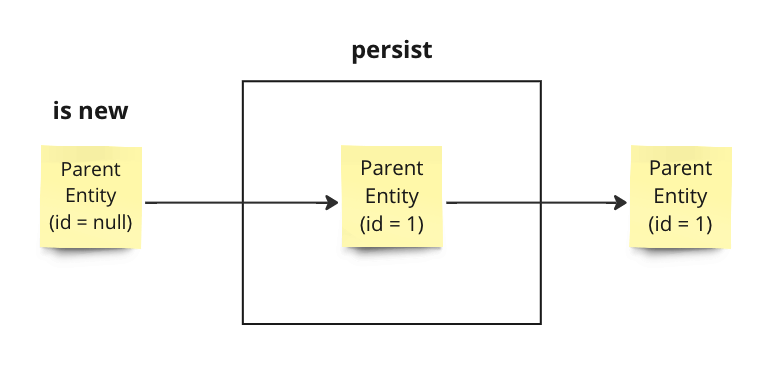
null이 아니기 때문에 새로 생성한 객체임에도 병합 작업이 진행된다.
아래는 버전 필드를 추가하기 전에는 문제가 되지 않던 코드의 흐름이다.
아래는 버전 필드가 추가된 후 문제가 발생한 코드의 흐름이다.
엔티티 클래스에 추가된 버전 필드의 기본값을 제거하거나 원시 타입을 사용한다.
package blog.in.action.domain;

import jakarta.persistence.*;
import lombok.Getter;

@Getter
@Entity
public class ParentEntity {
    @Id
    @GeneratedValue(strategy = GenerationType.AUTO)
    private Long id;
    private String state;
    @Version
    private Long versionNo; // ok

    public ParentEntity() {
        state = "CREATED";
    }
}
위에서 정의한 엔티티가 정상적으로 동작하는지 테스트 코드로 살펴보자. 마찬가지로 @Transactional(propagation = Propagation.NOT_SUPPORTED) 애너테이션을 사용해 @DataJpaTest 애너테이션에 적용된 트랜잭션으로부터 테스트 로직의 트랜잭션을 분리한다. 테스트 코드는 아래 순서대로 실행된다.
package blog.in.action;

import blog.in.action.domain.ChildEntity;
import blog.in.action.domain.ParentEntity;
import blog.in.action.repository.ChildRepository;
import blog.in.action.repository.ParentRepository;
import org.hibernate.TransientPropertyValueException;
import org.junit.jupiter.api.Test;
import org.springframework.beans.factory.annotation.Autowired;
import org.springframework.boot.test.autoconfigure.orm.jpa.DataJpaTest;
import org.springframework.dao.InvalidDataAccessApiUsageException;
import org.springframework.transaction.annotation.Propagation;
import org.springframework.transaction.annotation.Transactional;

import static org.junit.jupiter.api.Assertions.*;

@DataJpaTest(
        properties = {"spring.jpa.hibernate.ddl-auto=create-drop"}
)
public class ActionInBlogTest {

    @Autowired
    private ParentRepository parentRepository;

    @Autowired
    private ChildRepository childRepository;

    @Transactional(propagation = Propagation.NOT_SUPPORTED)
    @Test
    void defaultValueIsNullForVersionNo_updateStatus() {

        var parentEntity = new ParentEntity();
        parentRepository.save(parentEntity);


        var childEntity = ChildEntity.create(null, "CREATED", parentEntity);
        childEntity.update();


        var result = childRepository.save(childEntity);
        assertEquals("UPDATED", result.getState());
        assertNotNull(parentEntity.getId());
    }
}
테스트를 실행하면 다음과 같은 쿼리 로그를 확인할 수 있다.
Hibernate: select next value for parent_entity_seq
Hibernate: insert into parent_entity (state,version_no,id) values (?,?,?)
Hibernate: select next value for child_entity_seq
Hibernate: insert into child_entity (parent_entity_id,state,id) values (?,?,?)
댓글남기기