

MY BOOK
안쪽까지 들여다보는 스프링 시큐리티
책 보러 가기
이전 글에서는 동기식 컨텍스트 매니저(context manager)를 다뤘다. 이번 글에서는 비동기 컨텍스트 매니저에 대해 정리해 보려 한다.
파이썬 비동기 컨텍스트 매니저(Async Context Manager)는 네트워크 요청, 데이터베이스 쿼리, 파일 입출력처럼 대기 시간이 발생하는 비동기 리소스를 안전하고 효율적으로 할당하고 해제하기 위해 사용하는 파이썬 기능이다. 기존의 with 구문 대신 async with 구문과 함께 사용된다.
비동기 컨텍스트 매니저는 리소스를 얻거나 반납하는 과정에서 await가 필요한 경우에 유용하다. 코드 블록에 진입하기 전에는 비동기 초기화 작업을 수행하고, 블록을 빠져나올 때는 예외 발생 여부와 관계없이 비동기 정리 작업을 수행한다.
비동기 컨텍스트 매니저는 __aenter__()와 __aexit__()라는 코루틴(Coroutine) 메서드를 구현하여 동작한다. 이 메서드들은 내부적으로 await를 통해 실행되므로, 리소스를 준비하거나 해제하는 동안 프로그램이 블로킹(blocking)되지 않고 다른 비동기 작업을 처리할 수 있게 해준다.
핵심 동작 원리를 살펴보자. 비동기 컨텍스트 매니저는 내부적으로 다음 두 가지 메서드를 통해 동작한다.
__aenter__() 메서드
async with 블록에 진입할 때 자동으로 호출되고 await되는 메서드다.as 키워드 뒤에 지정된 대상 변수에 바인딩되어 블록 안에서 사용된다.__aexit__() 메서드
async with 블록을 빠져나올 때 자동으로 호출되고 await되는 메서드다.비동기 컨텍스트 매니저도 특별한 타입이 아니라, __aenter__()와 __aexit__() 두 메서드를 구현한 객체다. async with 문은 이 두 메서드를 적절한 시점에 호출하고 await하는 문법적 설탕(syntactic sugar)이라고 볼 수 있다. 비동기 컨텍스트 매니저는 아래 이미지처럼 동작한다.
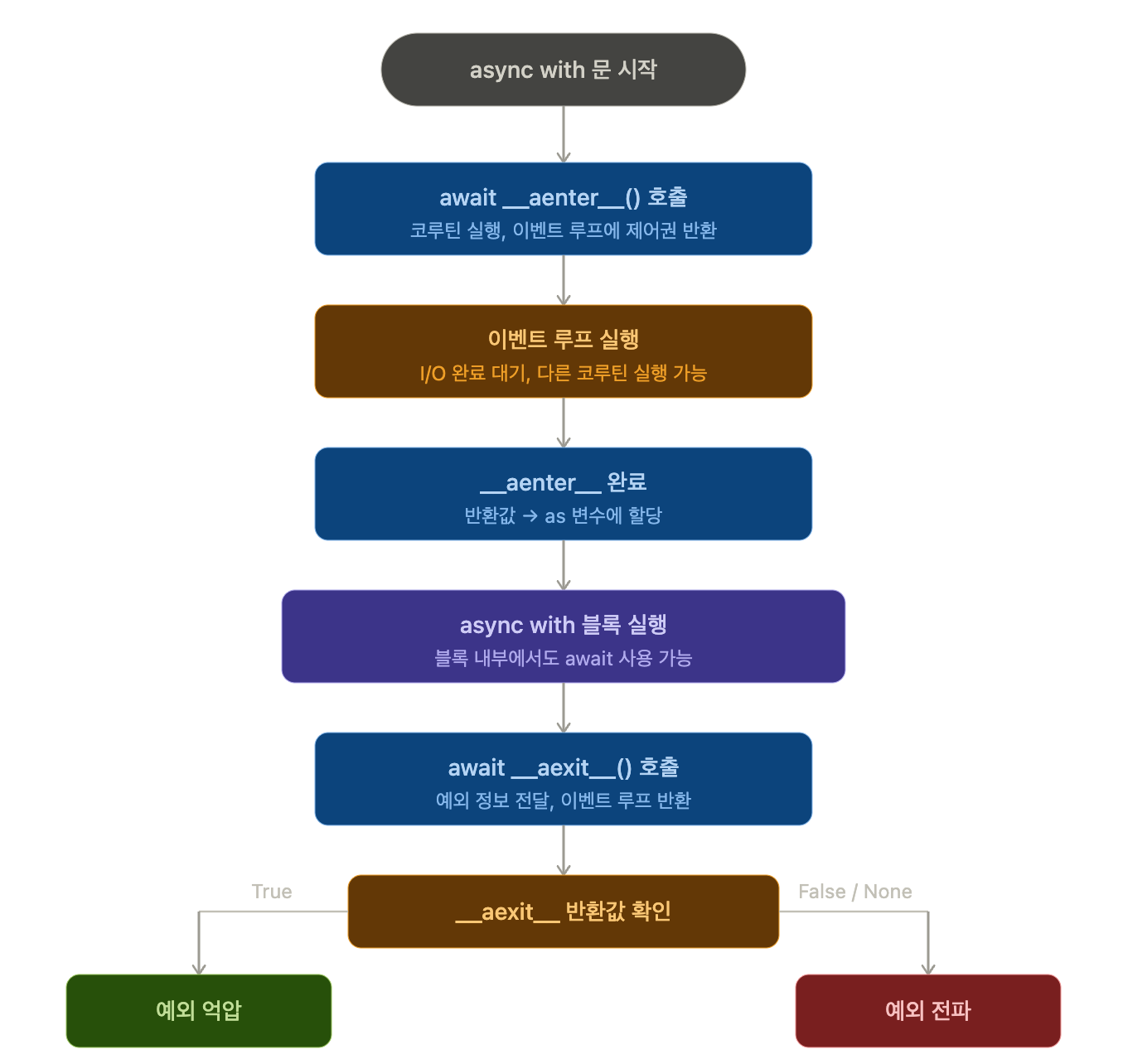
비동기 컨텍스트 매니저의 동작 과정을 확인하기 위해 간단한 예제 코드를 살펴보자. 먼저 비동기 세션을 열고 닫는 역할을 수행하는 AsyncSessionManager 클래스를 정의한다.
import asyncio


class AsyncSessionManager:
  def __init__(self):
    self.session = "async session"
    print("initialize async session manager")

  async def __aenter__(self):
    print("open async session manager")
    await asyncio.sleep(0.1)
    return self.session

  async def __aexit__(self, exc_type, exc_value, exc_traceback):
    if exc_type:
      print(f"handle exception: {exc_type}, {exc_value}, {exc_traceback}")
    await asyncio.sleep(0.1)
    print("close async session manager")
__aexit__() 메서드를 보면 세 개의 파라미터가 있다. 동기식 컨텍스트 매니저의 __exit__() 메서드와 동일하게 예외 정보를 전달받는다.
위 비동기 컨텍스트 매니저를 async with 블록 없이 직접 호출하면 다음과 같이 작성할 수 있다.
import asyncio
from async_session_manager import AssyncSessionManager


async def main():
  manager = AssyncSessionManager()
  try:
    m = await manager.__aenter__()
    print(f"do something with {m}")
  finally:
    await manager.__aexit__(None, None, None)


asyncio.run(main())
위 코드를 실행하면 다음과 같은 로그를 볼 수 있다.
initialize async session manager
open async session manager
do something with <object object at 0x1022a0930>
close async session manager
위 코드는 async with 블록을 사용하면 단순해진다. async with ... as 문법을 통해 보일러플레이트(boilerplate) 같은 try/finally 블록이 사라진다. __aenter__(), __aexit__() 메서드가 자동으로 실행되고 await된다.
import asyncio
from async_session_manager import AsyncSessionManager


async def main():
  async with AsyncSessionManager() as m:
    print(f"do something with {m}")


asyncio.run(main())
위 코드를 실행하면 이전과 동일한 로그를 확인할 수 있다.
initialize async session manager
open async session manager
do something with <object object at 0x104a90940>
close async session manager
로직 중간에 예외가 발생하면 어떨까? async with 블록이 없는 경우 다음과 같은 예외 처리 로직이 필요하다.
import sys
import asyncio
from async_session_manager import AsyncSessionManager


async def main():
  manager = AsyncSessionManager()
  try:
    m = await manager.__aenter__()
    print(f"do something with {m}")
    raise Exception("something went wrong")
  except:
    await manager.__aexit__(*sys.exc_info())
    raise
  else:
    await manager.__aexit__(None, None, None)


asyncio.run(main())
위 코드를 실행하면 다음과 같은 로그를 확인할 수 있다. 비동기 컨텍스트 매니저의 __aexit__() 메서드 내부에서 예외 객체가 있는지 확인하고 적절한 처리를 수행한다.
initialize async session manager
open async session manager
do something with <object object at 0x102bf0940>
handle exception: <class 'Exception'>, something went wrong, <traceback object at 0x10836d280>
close async session manager
Traceback (most recent call last):
  File "example-03.py", line 11, in main
    raise Exception("something went wrong")
Exception: something went wrong
async with 블록을 사용하면 위와 같은 예외 처리 블록이 별도로 필요 없다.
import asyncio
from async_session_manager import AsyncSessionManager


async def main():
  async with AsyncSessionManager() as m:
    print(f"do something with {m}")
    raise Exception("something went wrong")


asyncio.run(main())
위 코드를 실행하면 이전과 동일한 로그를 볼 수 있다.
initialize async session manager
open async session manager
do something with <object object at 0x10072c930>
handle exception: <class 'Exception'>, something went wrong, <traceback object at 0x105a3bf80>
close async session manager
Traceback (most recent call last):
  File "example-04.py", line 8, in main
    raise Exception("something went wrong")
Exception: something went wrong
비동기 컨텍스트 매니저와 async with 블록을 사용할 때 예외가 발생하면 __aexit__() 메서드의 반환 값에 따라 예외를 전파할지 무시할지(suppress)가 결정된다. True 값을 반환하면 필요한 예외 처리가 __aexit__() 메서드 내부에서 처리되었다고 판단하여 예외를 전파하지 않는다. False 값이나 반환 값이 없는 경우에는 그대로 예외를 전파한다.
AsyncSessionManager 컨텍스트 매니저 객체의 __aexit__() 메서드에서 True 값을 반환하는 예시 코드를 살펴보자.
class AsyncSessionManager:

  ...

  async def __aexit__(self, exc_type, exc_value, exc_traceback):
    if exc_type:
      print(f"handle exception: {exc_type}, {exc_value}, {exc_traceback}")
    await asyncio.sleep(0.1)
    print("close async session manager")
    return True # to suppress exception
예외가 전파되지 않기 때문에 이전 로그처럼 트레이스백 로그가 출력되지 않는다.
initialize async session manager
open async session manager
do something with <object object at 0x100424940>
handle exception: <class 'Exception'>, something went wrong, <traceback object at 0x105ab1440>
close async session manager
파이썬 표준 라이브러리인 contextlib의 @asynccontextmanager 데코레이터를 사용하면 클래스를 정의하지 않아도 비동기 컨텍스트 매니저를 생성할 수 있다. @asynccontextmanager 데코레이터를 사용하려면 비동기 제너레이터(async generator) 함수로 정의해야 한다. 아래와 같이 함수형 비동기 컨텍스트 매니저를 만들 수 있다.
import asyncio
from contextlib import asynccontextmanager


@asynccontextmanager
async def async_session():
  session = "async session"
  print("initialize async session") # __init__ 역할
  print("open async session") # __aenter__ 역할
  await asyncio.sleep(0.1)
  try:
    yield session
  except Exception as e: # __aexit__ 예외 처리 역할
    print(f"handle exception: {type(e)}, {e}")
    # raise를 제거하고 pass를 사용하면 예외를 무시한다.
    raise # to propagate exception
  finally:
    print("close async session") # __aexit__ 역할
@asynccontextmanager 데코레이터를 사용하면 클래스 형식이 아니라 함수 형식으로 정의할 수 있다. 명시적으로 try-except-finally 구문을 작성하기 때문에 코드 흐름을 파악하기 쉽다. 클래스 방식에 비해 보일러플레이트가 줄어 더 간결하다. 예외가 발생했을 때 예외를 전파할 것인지 무시할 것인지 raise/pass 키워드를 통해 제어할 수 있다. 함수형 비동기 컨텍스트 매니저도 동일한 방식으로 사용한다.
import asyncio
from async_session_contextlib import async_session


async def main():
  async with async_session() as session:
    print(f"do something with {session}")
    raise Exception("something went wrong")


asyncio.run(main())
위 코드를 실행하면 다음과 같은 로그를 확인할 수 있다.
initialize async session
open async session
do something with <object object at 0x105190940>
handle exception: <class 'Exception'>, something went wrong
close async session
Traceback (most recent call last):
  File "example-05.py", line 8, in main
    raise Exception("something went wrong")
Exception: something went wrong
댓글남기기