

MY BOOK
안쪽까지 들여다보는 스프링 시큐리티
책 보러 가기
spring-data-jpa 의존성을 사용하면 메서드 이름 규칙에 따라 쿼리를 생성해 주는 JpaRepository 인터페이스의 기능을 즐겨 사용한다. Optimistic lock 기능을 사용하기 위해 @Version 애너테이션을 추가하면서 예기치 않게 만난 에러를 정리하였다. 이전에 작성한 @Version 애너테이션 에러와 관련된 글은 추가(insert) 기능과 관련된 내용이었다면 이번에는 조회(find) 기능에 대한 내용이다.
단순한 조회에서 아래와 같은 에러가 발생하였다.
org.springframework.dao.InvalidDataAccessApiUsageException: org.hibernate.TransientObjectException: object references an unsaved transient instance - save the transient instance before flushing: blog.in.action.findby.ParentEntity; nested exception is java.lang.IllegalStateException: org.hibernate.TransientObjectException: object references an unsaved transient instance - save the transient instance before flushing: blog.in.action.findby.ParentEntity

    at org.springframework.orm.jpa.EntityManagerFactoryUtils.convertJpaAccessExceptionIfPossible(EntityManagerFactoryUtils.java:371)
    at org.springframework.orm.jpa.vendor.HibernateJpaDialect.translateExceptionIfPossible(HibernateJpaDialect.java:257)
    at org.springframework.orm.jpa.AbstractEntityManagerFactoryBean.translateExceptionIfPossible(AbstractEntityManagerFactoryBean.java:528)
    at org.springframework.dao.support.ChainedPersistenceExceptionTranslator.translateExceptionIfPossible(ChainedPersistenceExceptionTranslator.java:61)
    at org.springframework.dao.support.DataAccessUtils.translateIfNecessary(DataAccessUtils.java:242)
    at org.springframework.dao.support.PersistenceExceptionTranslationInterceptor.invoke(PersistenceExceptionTranslationInterceptor.java:153)
    at org.springframework.aop.framework.ReflectiveMethodInvocation.proceed(ReflectiveMethodInvocation.java:186)
  ...
에러 로그를 살펴보면 몇 가지 힌트를 얻을 수 있다.
ParentEntity이다.이전 글에서도 유사한 에러 로그를 보았기 때문에 @Version 애너테이션이 문제가 되는 것임을 직감하였다. 테스트 코드로 비슷한 상황을 연출하고 해결 방법을 정리해 보았다.
에러 상황을 재현해 본다. 먼저 ParentEntity 클래스 코드를 살펴보자.
CascadeType.ALL 모드로 ChildEntity 클래스와 관계를 맺는다.@Getter
@Setter
@NoArgsConstructor
@Entity
@Table(name = "TB_PARENT")
class ParentEntity {
public ParentEntity(String id) {
this.id = id;
}
@Id
private String id;
@OneToOne(mappedBy = "parentEntity", cascade = CascadeType.ALL)
private ChildEntity childEntity;
@Version
private Long versionNo;
}
ParentEntity 클래스와 1:1 연관 관계를 가지는 ChildEntity 클래스를 생성한다.
@Getter
@Setter
@NoArgsConstructor
@Entity
@Table(name = "TB_CHILD")
class ChildEntity {

    public ChildEntity(String id, ParentEntity parentEntity) {
        this.id = id;
        this.parentEntity = parentEntity;
    }

    @Id
    private String id;

    @OneToOne
    private ParentEntity parentEntity;

    @Version
    private Long versionNo;
}
다음으로 ChildEntityRepository 인터페이스를 살펴보자. JpaRepository 인터페이스를 상속하고, ParentEntity를 이용하여 조회하는 메서드를 추가한다.
interface ChildEntityRepository extends JpaRepository<ChildEntity, String> {

    Optional<ChildEntity> findByParentEntity(ParentEntity parentEntity);
}
테스트 코드를 실행하기 전에 조회에 필요한 데이터를 생성하는 코드를 살펴보자. @BeforeEach 애너테이션을 통해 테스트마다 데이터를 초기화한다.
parentKey 값을 PK로 갖는 부모 데이터와 childKey 값을 PK로 갖는 자식 데이터를 각각 하나씩 생성한다.
    private static final String parentKey = "parentKey";
    private static final String childKey = "childKey";

    @BeforeEach
    public void beforeEach() {
        parentEntityRepository.deleteAll();
        childEntityRepository.deleteAll();
        ParentEntity parentEntity = new ParentEntity(parentKey);
        parentEntity.setChildEntity(new ChildEntity(childKey, parentEntity));
        parentEntityRepository.saveAndFlush(parentEntity);
    }
에러가 발생하는 테스트 코드는 다음과 같다. 아래 코드를 실행하면 InvalidDataAccessApiUsageException 에러가 발생한다.
parentKey 값을 가지는 부모 객체를 만든 후 이를 이용해 조회한다. @Test
public void test_withoutVersionNo_throwException() {
ParentEntity parentEntity = new ParentEntity(parentKey);
assertThrows(InvalidDataAccessApiUsageException.class, () -> childEntityRepository.findByParentEntity(parentEntity));
}
에러를 해결하려면 부모 객체를 생성하는 데 parentKey 값뿐만 아니라 versionNo 필드 값도 임시로 설정하여 전달하면 된다. @Version 애너테이션이 붙은 필드가 null 값을 가지지 않으면 에러가 발생하지 않는다.
    @Test
    public void test_withVersionNo_isPresent() {
        ParentEntity parentEntity = new ParentEntity(parentKey);
        parentEntity.setVersionNo(99L);
        Assertions.assertThat(childEntityRepository.findByParentEntity(parentEntity).isPresent()).isTrue();
    }
위에서 살펴본 두 테스트 코드 모두 정상적으로 통과한다.
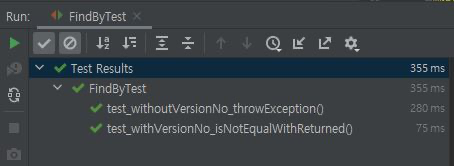
에러가 발생한 원인은 저장되지 않은 객체를 이용해 조회를 수행하였기 때문이다. 분명히 저장된 데이터이지만, @Version 애너테이션이 사용되는 경우 저장 여부를 판단하는 데 버전 관리에 사용되는 값의 null 여부를 함께 확인하기 때문에 이런 문제가 발생한 것으로 생각된다. 에러가 발생한 콜 스택(call stack)을 추적해 보면 AbstractEntityPersister 클래스의 isTransient 메서드에서 버전 관리 여부에 따라 임시 객체 판단이 이루어지는 것을 확인할 수 있다.
public abstract class AbstractEntityPersister implements OuterJoinLoadable, Queryable, ClassMetadata, UniqueKeyLoadable, SQLLoadable, LazyPropertyInitializer, PostInsertIdentityPersister, Lockable {

    // ...

    public Boolean isTransient(Object entity, SharedSessionContractImplementor session) throws HibernateException {
        Serializable id;
        if (this.canExtractIdOutOfEntity()) {
            id = this.getIdentifier(entity, session);
        } else {
            id = null;
        }
        if (id == null) {
            return Boolean.TRUE;
        } else {
            Object version = this.getVersion(entity);
            Boolean result;
            if (this.isVersioned()) {
                result = this.entityMetamodel.getVersionProperty().getUnsavedValue().isUnsaved(version);
                if (result != null) {
                    return result;
                }
            }
            result = this.entityMetamodel.getIdentifierProperty().getUnsavedValue().isUnsaved(id);
            if (result != null) {
                return result;
            } else {
                if (session.getCacheMode().isGetEnabled() && this.canReadFromCache()) {
                    EntityDataAccess cache = this.getCacheAccessStrategy();
                    Object ck = cache.generateCacheKey(id, this, session.getFactory(), session.getTenantIdentifier());
                    Object ce = CacheHelper.fromSharedCache(session, ck, this.getCacheAccessStrategy());
                    if (ce != null) {
                        return Boolean.FALSE;
                    }
                }
                return null;
            }
        }
    }
}
댓글남기기